
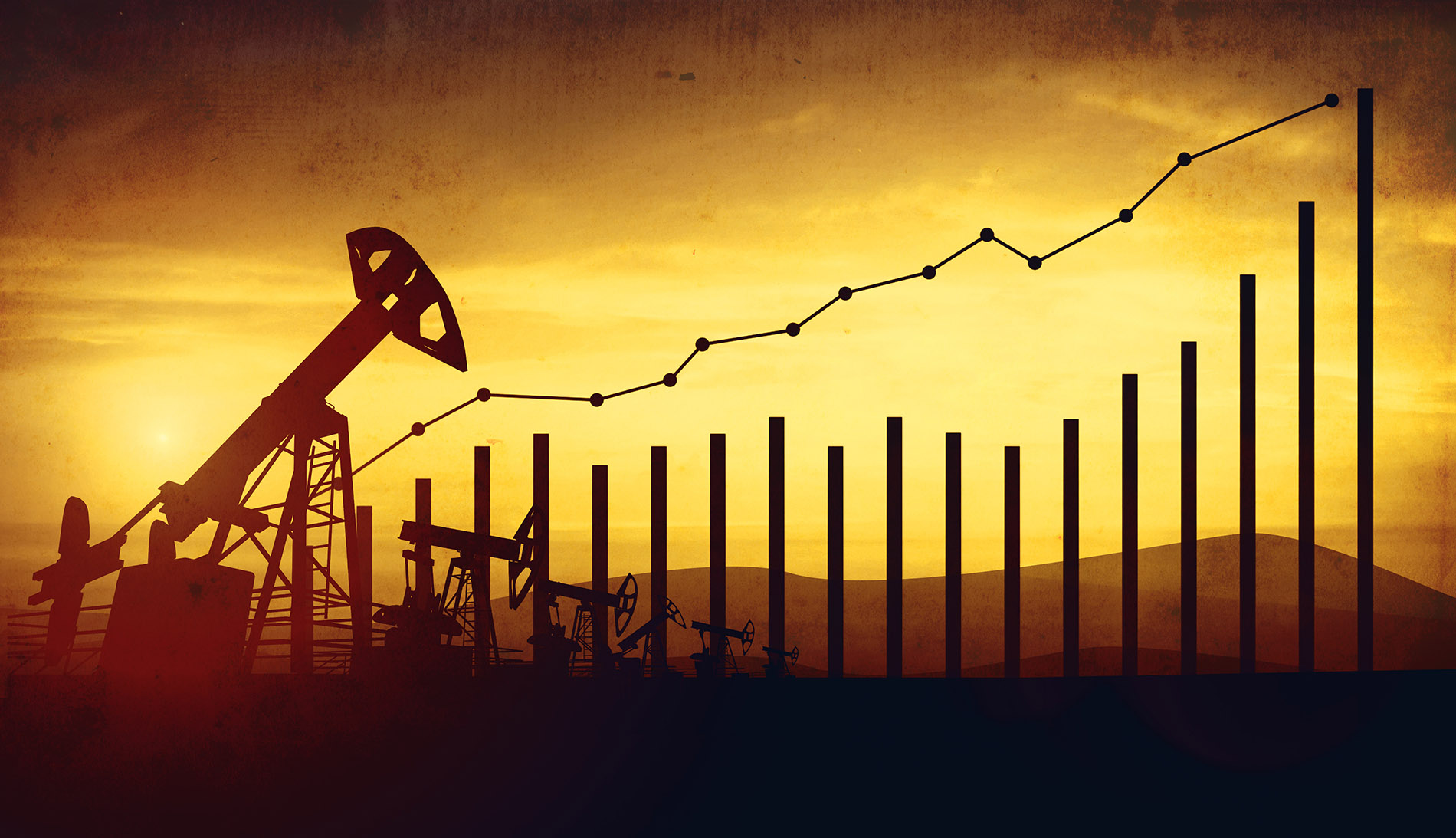
If you pay much attention to the news, then you’ve probably read or seen people talking about the price of oil before. But how much do you really know about oil, oil prices, and why oil prices are important to the global economy (and your own pocketbook)?
If the answer to any of those questions is “not much”, don’t worry, you’re not alone and we’ve got you covered. We have the answers to all of the questions you might have about oil prices, including the question everyone’s asking lately: Why are oil prices rising?
What Is the Price of Oil?
The price of oil is the amount of money a single barrel of oil is being sold for at any given moment, most often expressed in U.S. dollars. Barrels of oil contain 42 gallons of crude oil, which can be refined to produce between 19 and 20 gallons of gasoline.
Oil is what’s known to economists as a fungible commodity. This means that, for the most part, one barrel of oil is interchangeable with any other. This also means that oil prices won’t vary much barrel to barrel in a given region, or even globally.
This is why we talk about the price of oil — the amount a single barrel of crude oil is being sold for — as a single number.
Why Are Oil Prices Rising?
Oil prices are constantly in flux, rising and falling due to changes in market conditions. If global demand for oil rises, this can cause a rise in oil prices. Similarly, if global supply of oil falls or is constrained for some reason, oil prices will rise.
If oil prices are rising, then one of three things is occurring: global supply is faltering, global demand is surging, or both of these things are happening simultaneously.
In 2022, oil prices rose due to geopolitical tensions in Ukraine, and concerns over what the war could do to the global supply of oil.
What Affects the Price of Oil?
Crude oil prices are affected by two groups of market participants: producers and consumers. Oil companies and oil-producing countries that are responsible for oil production can affect the price of oil through their oil output. Higher oil supplies generally mean lower prices, while lower oil supplies can mean higher prices.
Consumers of oil can also affect the price of oil. Oil plays an integral role in the global economy — it can be refined into transportation fuels, plastics, petrochemicals … the list goes on. If the global economy is growing, then it’s a good bet that global demand for oil is also growing, and that can lead to oil price hikes.
Is There Only One Price for Oil?
We mentioned earlier that barrels of oil are interchangeable with one another, which makes it possible to talk about a global price for oil.
That said, the price you pay for a barrel of oil in Europe won’t be exactly the same as the price you pay for a barrel of oil in the United States. In fact, both Europe and the United States have average crude oil prices that move up and down based on their regional oil market.
Enter your ZIP Code and compare electricity rates
What Are the Different Benchmark Prices for Oil?
In oil market jargon, average prices are called benchmarks. Benchmarks are region-based, and there are only two that are worth mentioning: the U.S. benchmark and the European benchmark.
America’s benchmark is called the West Texas Intermediate, shortened to WTI crude, while Europe’s benchmark oil price is called Brent crude.
If you see mention of a global oil price in a news article without any reference to a specific benchmark oil price, it’s a safe bet that the author is referring to the Brent crude benchmark.
Who Controls the Price of Oil?
Oil prices are determined by the balance of global supply and global demand in the oil market. Because of this, no single oil company or oil-producing country can fully control the price of oil.
That said, oil producers can affect the price of oil, especially if they work together. The best example of this is a group of countries called OPEC. You’ve probably heard of OPEC before — OPEC stands for the Organization of Petroleum Exporting Countries, and together these countries work to affect the price of oil.
Which Countries Are in OPEC?
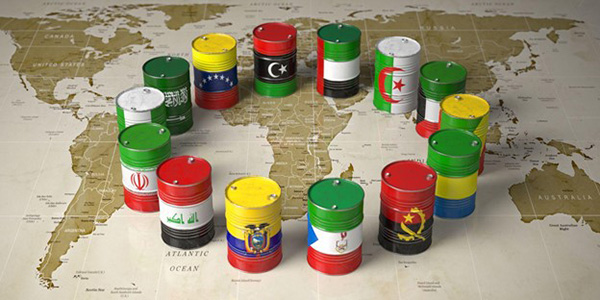
OPEC member countries include Algeria, Angola, Equatorial Guinea, Gabon, Iran, Iraq, Kuwait, Libya, Nigeria, the Republic of the Congo, Saudi Arabia, the United Arab Emirates, and Venezuela.
These 13 countries, led by Saudi Arabia, all work together to try to control oil prices as best they can.
They are sometimes joined by other countries outside the official organization in these attempts to control oil prices. This wider group of oil-producing countries is referred to as OPEC Plus, and notably has included Russia in recent years.
Does OPEC Control the Price of Oil?
OPEC doesn’t fully control the price of the oil. Because barrels of oil are interchangeable, if one oil producer tries to charge a higher price for their oil than another, buyers will simply go elsewhere. This makes it impossible for oil producers — even a group of them — to fully control oil prices.
That said, OPEC can affect the price of oil if it works together. OPEC countries do this by collectively adjusting how much oil they export in a strategic way. If OPEC wants oil prices to rise, it can ask its members to cut oil exports, reducing the global supply of oil (and raising oil prices in the process).
If OPEC wants to reduce the price of oil, it can ask its member countries to export every bit of their spare production capacity. Most of the time though, OPEC works to maintain a stable but high price of oil, which is beneficial to its members, who are all oil-producing countries.
Does the United States Control the Price of Oil?
Unlike OPEC, the United States doesn’t directly try to control the price of oil, except in extreme cases with the Strategic Petroleum Reserve (more on that in a bit).
Instead, here in the U.S., the oil output of oil companies is driven purely by market conditions and geology.
This doesn’t mean that the United States can’t affect the global price of oil though. In the late 2000s and 2010s, the American Shale Revolution — driven by technological advances that allowed oil producers to extract oil from previously inaccessible shale rock through the processes of hydraulic fracturing and horizontal well drilling — increased global supplies and helped bring oil prices down.
What Is the Strategic Petroleum Reserve?
The Strategic Petroleum Reserve, commonly abbreviated as the SPR and occasionally confused with the Federal Reserve, is a reserve of crude oil managed by the president of the United States. The Strategic Petroleum Reserve has a capacity of 714 million barrels of oil.
The purpose of the Strategic Petroleum Reserve is to act as a balance to the oil market if oil supplies outside of the U.S. drop suddenly. You can read a history of all the times that oil has been released from the Strategic Petroleum Reserve.
Starting in spring 2022, the Biden administration ordered daily releases of oil from the Strategic Petroleum Reserve to help stop rising oil prices.
How Do Oil Prices Affect Gas Prices?
Through refining processes, crude oil can be turned into gasoline. It makes sense then, that oil prices and gasoline prices are linked. If oil prices rise, it’s reasonable to expect gas prices to also rise. Similarly, if oil prices fall, gasoline prices can fall as well.
Crude oil isn’t the only factor in gasoline prices. Taxes, refining costs, and distribution costs all add up to the price you pay at the pump, but crude oil prices are by far the most important component of gas prices, accounting for more than 50% of what you pay per gallon.
Did the Invasion of Ukraine Affect Oil Prices?
Russia’s invasion of Ukraine sent oil prices skyrocketing. Russian oil is an important part of the global oil market, and in the wake of the invasion of Ukraine, investors worried that geopolitics would prevent all of that Russian oil from making it to the oil market.
As a result, oil prices jumped to more than $120 per barrel.
Are Oil Prices Expected to Rise in the Future?
In late 2022, oil prices fell to levels not seen since before Putin’s decision to invade Ukraine, based on concerns over growth in the global economy.
Predicting the future of the oil market is famously difficult, so it’s hard to say with any certainty whether oil prices will rise or fall in the future. If the global economy sees strong growth, global demand for oil will increase, and so will oil prices.
On the supply side, if global oil output drops for any reason (like White House sanctions on Russia), oil prices could also rise.
That’s It for Our Oil Price Overview
Oil price increases make headlines around the world, but many of us don’t know much about oil prices beyond their effect on gas prices and how much we pay at the pump.
Hopefully our brief guide on oil prices — and why oil prices are rising — has you feeling like an oil market expert. The next time you see a news article on OPEC cuts, Strategic Petroleum Reserve inventories, or a jump in Brent crude prices, you’ll have the context to understand what’s actually happening.
And hey, if nothing else, you now know what the word fungible means!
If you’d like to learn more about energy related topics like this one, the Energy Savings blog has a large archive of informative and interesting articles that’ll have you feeling like an energy expert in no time.
Brought to you by energysavings.com
All images licensed from Adobe Stock.
Featured image: