
Key Takeaways
- Hans Christian Ørsted’s discovery that an electrical current can impact magnetism laid the groundwork for today’s electric motors and generators.
- While Ørsted’s research was incomplete, it was fundamental and led future scientists and researchers to apply it to technologies we use today.
- Ørsted’s discovery has also played a role in helping combat climate change through renewable energies that use his initial discovery as their basis for energy generation.
Many legendary scientists have contributed to our knowledge of electricity and magnetism, including well-known names like Serbian-American inventor Nikola Tesla, French physicist François Arago, and German physicist Heinrich Hertz. But one that sometimes falls through the cracks even though his work continues to impact the world of energy generation today is Hans Christian Oersted (Ørsted).
Hans Christian Oersted was a Danish physicist and chemist who significantly contributed to our understanding of energy. He did so through his groundbreaking discovery of the relationship between electricity and magnetism in 1820.
Oersted‘s experiments and findings paved the way for modern electromagnetism and energy generation that shape the world we live in today. This is one of the reasons he’s the namesake for the Ørsted Medal, which is awarded to a scientist who has had an outstanding, widespread, and lasting impact on the teaching of physics.
Let’s review Oersted’s discoveries and how they’ve impacted today’s world of energy generation.
How Did Hans Christian Ørsted’s Discovery Contribute to Our Understanding of Energy?
Before 1820, most scientists thought no relationship existed between electricity and magnetism, despite evidence of the opposite. One key piece of evidence was that a compass could switch polarities if struck by lightning.
Ørsted traveled through Europe and met with various other scientists. It was when he met with scientist Johann Wilhelm Ritter that he began to believe there was some connection between electricity and magnetism. And he set out to prove this theory.
In 1806, Ørsted became a professor of physical science at the University of Copenhagen in Denmark, where he also researched acoustics and electricity.
It was during a lecture at the University of Copenhagen in 1820 that Oersted had a breakthrough about his theory for the first time. He was setting up an apparatus that involved a magnet, a compass, a wire, and a battery. When he connected the two wires to the battery and the magnet, he saw the compass needle jump away from the magnet’s north pole — the opposite of what it was supposed to do. The movement was slight, but this unusual magnetic needle response and the lack of a mathematical explanation had Oersted intrigued, and he continued researching.
After three months of research, he was convinced an electrical current could cause a magnetic field, which he called an “electric conflict” — today, we call this “the magnetic effect.” Though he had only qualitative results due to the lack of mathematical information to explain his findings, his revelation ended up published in a pamphlet on July 21, 1820, which was distributed to physicists.
His groundbreaking discovery demonstrated that electricity and magnetism were interconnected, laying the groundwork for the field of electromagnetism. This revolutionized our understanding of energy.
Oersted’s discovery made him the first person to detect this phenomenon, but it opened the floodgates for numerous technological advancements based on the principles of electromagnetism. These advancements include electric motors, generators, and transformers — all essential parts of modern power systems. When he established the connection between electricity and magnetism, Oersted provided the scientific basis for using electromagnetic forces in a wide range of applications.
Oersted‘s findings led other physical science experts, such as Michael Faraday and James Clerk Maxwell, to further investigate the electromagnetic relationship. Their contributions, supported by Oersted’s initial findings, spurred the development of Maxwell’s equations. This is a set of fundamental laws that describe the behavior of electric and magnetic fields. These equations form the cornerstone of classical electromagnetism and have helped shape our understanding of the various forms of energy.
What’s the Relationship Between Oersted’s Experiments and the Concept of Electromagnetism in Energy Generation?
Though not fully fleshed out, Oersted‘s experiments established a fundamental relationship between electricity and magnetic forces. This helped form the basic concept of electromagnetism, which is crucial to generating, transmitting, and using electrical energy.
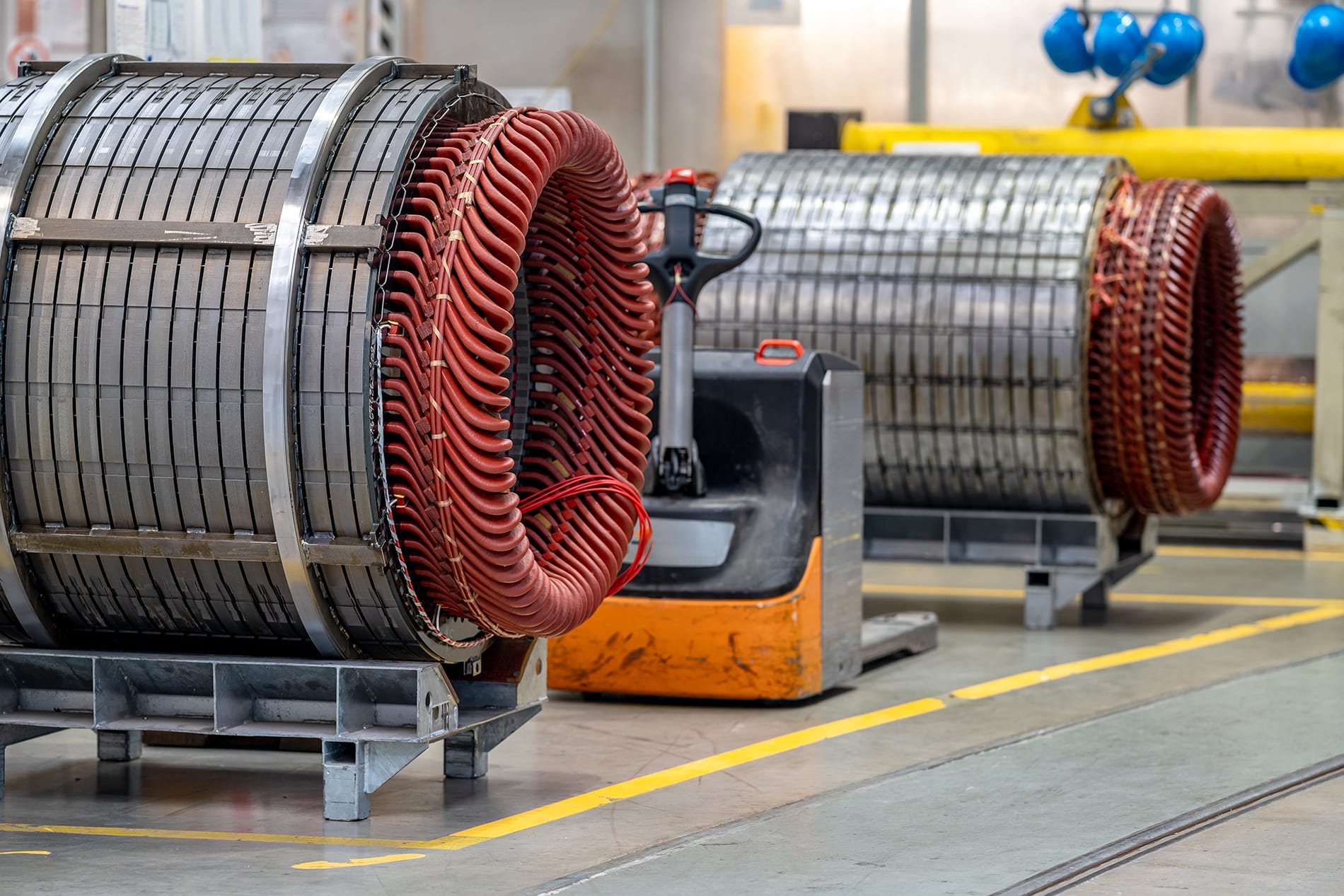
Oersted‘s experiments demonstrated that an electric current creates a magnetic field, highlighting the possibility of electricity generation through the use of magnets, and vice versa. This established a critical concept that others used to develop electric motors and generators through magnetic induction. Both electric motors and generators are vital components of modern energy systems.
Oersted‘s cutting-edge work also accelerated the understanding of electromagnetic induction, which power plants and electrical grids require to operate. Electromagnetic induction is when a changing magnetic field induces an electric current in a conductor. Power plants harness this process to generate electricity efficiently. It’s also the underlying principle behind the transformers in electrical transmission systems.
In addition, Oersted‘s experiments laid the foundation for the development of electromagnetic devices, such as solenoids and electromagnets, which are crucial in many energy-generation technologies.
Solenoids impact our daily lives, and we generally don’t even notice it. You’ll find them in various devices, including relays (electrical switches found in many large machines like air conditioners), electric door locks, and even a vehicle’s automatic transmission.
Electromagnets also play a low-key role in our lives and even our health. You can find them in MRI machines in hospitals and in transportation, in the form of magnetic levitation trains. Electromagnetism’s versatility in energy generation underscores the significance of Oersted‘s contributions in physics and electrical engineering.
What Impact Did Hans Christian Oersted’s Discovery Have on the Development of Electric Motors and Generators?

Electric motors and generators play huge roles in our lives, from the toys we played with as kids to the electric cars many of us drive today or will drive in the future. Oersted’s discovery was pivotal in developing these components that we now use in our everyday lives by providing the foundation for understanding how an electric current produces mechanical energy, and vice versa.
Using Oersted‘s principles, other inventors and scientists could design and improve electric motors, which convert electrical energy into rotational mechanical energy. This cleared the path for new possibilities to power industrial machinery and develop transportation systems, amid countless other applications.
Enter your ZIP Code and compare electricity rates
Oersted’s discovery also helped blaze the trail in developing generators, which harness mechanical energy to produce electricity. Generators are the backbone of electrical power plants, allowing them to generate and distribute electricity on a large scale.
Oersted‘s work inspired new experimentation and innovation in the scientific community. It helped push researchers to explore electromagnetism’s potential applications beyond motors and generators. This led to breakthroughs in telecommunications and even the development of particle accelerators.
How Did the Scientific Community React and Respond to Oersted’s Discovery?
Oersted’s discovery created great interest and excitement within the scientific community. Scientists worldwide continued his research, validating and expanding upon his findings.
French physicist André-Marie Ampère built upon Oersted‘s work and developed what Oersted was missing: mathematical equations to describe the relationship between electricity and magnetism. Ampère‘s contributions consolidated Oersted’s discovery, further advancing the concept of electromagnetism.
Oersted‘s groundbreaking experiment had a ripple effect that extended to the technology field. Scientists and inventors began exploring practical applications of electromagnetism. As mentioned earlier, this helped spur the development of electric motors, generators, and other devices that revolutionized industries and everyday life. Oersted’s discovery was one of the many bricks in the road that paved the way for the electrical revolution.
How Did Oersted’s Experiments Contribute to the Understanding of the Connection Between Electricity and Magnetism in Energy Generation?
Oersted‘s trailblazing experiments in the 1800s demonstrated the fundamental link between electricity and magnetism. While it was still an unproven theory, it paved the way for significant advancements in the electromagnetism field. When Oersted showed that a current-carrying wire could deflect a compass needle, it gave scientists tangible proof of the interaction between these two forces.
This work set the scene for developing electromagnets, which are essential components in today’s world. Creating magnetic fields using electric current revolutionized many industries, including telecommunications, transportation, health care, and manufacturing. This is the framework for the advanced electrical civilization we live in today.
In What Ways Did Oersted’s Findings Impact Subsequent Research and Technological Innovations in the Energy Field?
Oersted‘s findings laid the groundwork for numerous technological innovations in the energy field. His discovery was a road map that helped guide scientific research and inspired advancements in many areas.
Most importantly, it sparked further investigations into electromagnetism, including James Clerk Maxwell publishing “A Dynamical Theory of the Electromagnetic Field” in 1865. Maxwell’s equations unified the understanding of electricity and magnetism, building upon Oersted’s discoveries and offering a comprehensive framework for studying energy.
Hans Christian Oersted’s work also eventually stimulated researchers delving into the world of energy generation. Coal, natural gas, and nuclear power plants are three key examples of how Oersted’s early research led to technological innovations in the future. All three power sources use steam from heated water to activate turbines that use electromagnets to create electricity. While this was the reverse of what Oersted discovered, it was his initial discovery that electricity could impact magnetism that spurred the discovery that magnets can create electricity.
Oersted’s research even helped guide us to the renewable energy sources that are helping to reduce our carbon footprint today. More on that next.
How Did Oersted’s Discovery Help With the Development of Practical Renewable Energy Applications?
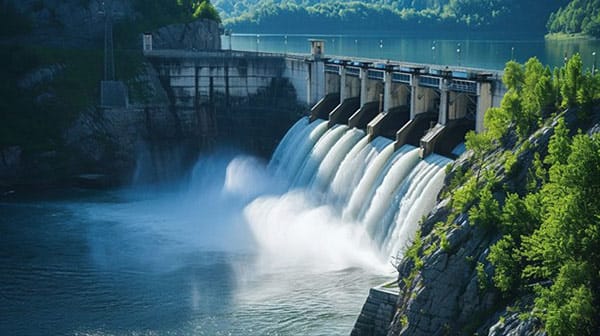
Oersted’s research also acted as a launching pad for renewable energy sources, such as hydroelectric power and wind energy. Through the new understanding of how to use magnetism to create electricity, researchers found ways to harness natural forces to generate electricity via turbines and electric generators.
Oersted’s discovery was crucial in developing practical applications in green energy technology. The revelation that there’s a connection between electricity and magnetism helped pave the way for renewable energy sources, such as wind and water to generate electricity.
His findings pushed inventors and scientists to look into harnessing natural forces to produce electrical power. Eventually, these inventors and scientists developed technologies like hydroelectric dams and wind turbines that convert water and wind energy, respectively, into electrical energy via generators.
While it was very early and somewhat fundamental, Oersted’s discovery marked a crucial milestone in developing renewable energy technologies. His research inspired future innovation in harnessing renewable resources.
What Lessons Can We Learn From Oersted’s Discoveries About the Interconnectedness of Different Energy Forms?
Oersted’s discoveries highlight the fundamental interconnectedness of different energy forms. His experiments revealed that energy manifestations, such as electricity and magnetism, are closely linked and can influence each other.
This interconnectedness extends beyond electricity and magnetism. It applies to various energy forms, highlighting energy systems’ complex and interdependent nature. This also underscores how important it is to adopt a holistic approach to energy generation, transmission, and use.
Oersted’s discoveries further remind us how important curiosity and experimentation are in advancing science. Through his rudimentary experiments, Oersted revolutionized our understanding of energy and helped inspire technological innovations that still shape our daily lives and will continue to do so for many years.
Researchers have been able to design more efficient and sustainable energy systems by recognizing energy forms’ interconnectedness. This interconnected view has helped advance renewable energy sources, energy storage technologies, and smart grid systems. These all aim to optimize energy use, minimize its environmental impact, reduce our carbon footprint, and lower our reliance on fossil fuels.
One Small Discovery Continues Changing the World

Hans Christian Oersted had a seemingly far-fetched and novel theory, but a small event during a lecture helped prove him right. That slight movement of the compass in his lecture back in 1820 led to advancements in energy generation that have brought us electric vehicles, advanced telecommunications, and even renewable energy. This goes to show how one out-of-the-box idea, some luck, and close attention to detail can impact the scientific world for over 200 years. And this type of research continues, leading us down new paths of experimentation and discovery.
Brought to you by energysavings.com
All images licensed from Adobe Stock.