

Key Takeaways
- Homeowners, businesses, and communities can earn bill credits through net metering for the excess energy they generate.
- It’s available across many but not all U.S. states.
- Lower utility bills, reduced emissions, and job creation are just a few of net metering’s benefits.
- Anyone interested in participating must contact their utility company to discuss practicalities, such as availability, safe connection, and prices.
The clean energy industry is seeing more people buy into the solar panel and wind energy revolution. Innovative thinking is reshaping our relationship with renewables.
It’s a give-and-take scenario. Just as the seasons change, so do renewable energy generation levels. Homeowners or businesses with rooftop solar panels might need to draw electricity from the grid on cloudy or rainy days.
But what about during the sunshine-filled times of bountiful harvests? Net metering aims to maximize all clean energy we generate and reward those providing it.
People are catching onto the idea that generating their own electricity can reduce energy bills, save money long-term, and fight climate change. Here’s how net metering is altering our energy use in the transition to net-zero emissions.
What Is Net Metering?
Net metering is a billing tool that gives energy credits to anyone producing power for the grid others use.
Residential customers and businesses can connect their renewable energy systems to the grid and transfer any surplus power for rewards. Compensation and net metering rules vary widely across the U.S., from time of use to prices and rewards. Furthermore, net metering is not even available in some states.
Experts think the average solar energy generation system could supply up to 40% of the nation’s electricity by 2035.That’s a huge amount. The investment and regulation changes required cannot be ignored as net metering becomes a vital cog in the energy transition toward net-zero emissions.
Pro tip: Check the Database of State Incentives for Renewables & Efficiency (DSIRE) for net metering programs in your area.
Enter your ZIP Code and compare electricity rates
How Does Net Metering Work?
People with solar power systems, wind turbines, or geothermal renewable energy systems may produce excess electricity at certain times. However, they will likely need to draw from the power grid when their renewable energy sources are down.
Homeowners and businesses can store this electricity in home batteries if they’re part of their solar installation. Alternatively, they can arrange to push excess electricity into the power grid with their electric utility via net metering.
With net metering, modern electronic electricity meters count an address’s electricity. They also measure how much goes into the grid, recorded in kilowatt-hours (kWh).
Utilities document what people use and generate. They offer bill credits or reductions for the system’s output over time. Many net metering properties use power generated by their solar panels during the day and earn credits. Then, at night, they pull energy from the grid, which can be paid for directly or covered by those previously earned credits.
Long-term net energy metering programs could also be seen as part of a seasonal billing cycle. For example, solar panels could earn a homeowner many net metering credits during a sunny summer. Then, when buildings require more energy for heating and lighting in the winter, those energy credits cover the higher winter energy costs.
Pro tip: Properties with battery storage cannot usually participate in net metering programs.
Different Net Metering Billing Programs Explained
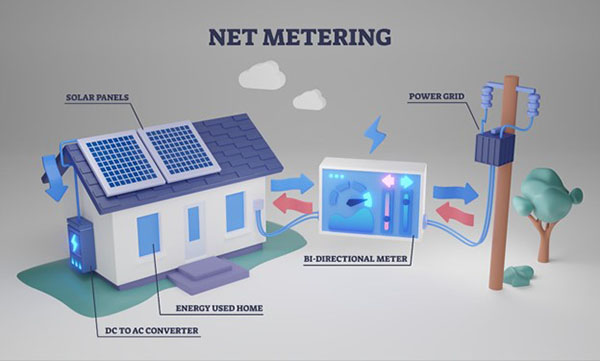
There are several net metering billing programs available to homeowners. Net metering programs should help people reduce energy costs over long-term billing periods. Every state has a different net metering policy and regulatory reach, so check with your electric utility for their approach. Solar panels are the most popular, but wind turbines and geothermal sources may also function.
Your property may need to undergo some work to allow electricity to flow into the grid, including an appropriate bidirectional meter, a solar inverter, and, of course, a renewable energy source.
This is called interconnection, which protects the grid and people’s properties when surges or accidents occur. A utility and, most likely, the state may both oversee interconnection before any electricity can be pushed into the grid.
Pro tip: Most utility companies limit the size of solar arrays to prevent people from profiteering by building mini solar farms on their properties.
Here are some of the billing programs that may be available to you.
Traditional Net Metering Credits
Cash payments are rare for net metering. Almost all net metering programs offer renewable and solar customers energy credits for any power they send into the electric grid.
These credits offset any energy use that happens when the property’s renewable energy sources aren’t producing electricity, and the house is drawing energy from the grid. Some electric bills square off the credits and debits every month; others do it over a year.
Usually, net metering programs offer the same kilowatt-hour retail rate for energy consumed and credited.
Buy All/Sell All Net Metering
The principle is the same for buy-all/sell-all agreements, but the billing is different, and two electric meters are used.
The first electric meter tracks a property’s energy use with a specific kWh unit price. A second meter records its clean energy production with an agreed-upon kWh price. Each month’s electric bill totals both values. The excess generation credits are then deducted from the energy use. That leaves a final, simple-to-follow bill that shows usage minus production.
Enter your ZIP Code and compare electricity rates
Net Billing
Net billing allows renewable energy generation sites to turn into mini power plants.
Utility companies buy excess energy at an agreed wholesale rate rather than distributing bill credits. While that sounds great, most net billing offers per kWh of electricity produced are usually lower than net metering.
Solar Buyback
Solar buyback works similarly to net metering, but the kilowatt-hour received for excess energy pushed into the grid differs from the price paid to use electricity.
Utility companies set these solar net metering prices. You’ll most likely pay more for the energy you use than the compensation you receive for the clean energy you generate.
NEM 3.0
The California Public Utilities Commission is taking net energy metering (NEM) to a new level with NEM 3.0. Net metering is still available, but the credit rate drops dramatically if the property lacks battery storage. This stance is opposite to most net metering programs, which often don’t allow battery storage.
These new net metering rules are designed to encourage people with charged battery storage power to release it when demand soars. The program works like a time-of-use tariff. Energy exporters receive higher bill credit amounts if they export energy during these periods and have a battery.
Those with batteries get a higher rate for the energy they export. The idea is to reward those who maximize their renewable energy.
Aggregate Net Metering (or Agricultural Net Metering)

Aggregate net metering, often called “Agricultural Net Metering,” helps farmers with several buildings and meters. Farms frequently have solar arrays atop buildings that use little energy, such as a barn.
This type of program allows the credits from one meter to pass to another on-site meter where energy use is higher. In this scenario, solar electricity generated on a barn can create energy credits for somewhere more helpful, like the main farmhouse.
Virtual Net Metering
Virtual net metering is used for community solar programs. This often works in one of two ways:
- Homeowners or businesses can subscribe to a community solar array that exists off-site. Those subscribers then share the net metering bill credits.
- A multi-tenant property owner can install a form of renewable energy generation onsite and then share the energy credits with the tenants.
How Can Net Metering Reduce My Electricity Bills?
Net metering maximizes excess energy that would otherwise be lost. Utility companies reward small-scale renewable energy producers, usually with energy credits, to help reduce electric bills later.
Net metering brings many other benefits, including:
- Reducing a property’s CO2 emissions through increased use of clean energy sources in the electric grid
- Saving money on utility bills, which can help offset the initial investment for installing solar systems or a wind turbine
- Stabilizing and balancing the power grid thanks to thousands of mini-generators supporting supply
- Reducing energy lost through long-distance transmission and distribution systems by using locally produced electricity
- Creating new renewable energy sector jobs
- Maximizing all energy created by renewables and reducing waste
- Encouraging people to buy electric vehicles (EVs), as a charged EV battery may also be able to push electricity back into the grid for bill credits during peak periods
- Increasing energy independence and more control over bills for those involved
- Helping reduce the nation’s dependence on fossil fuels
What Types of Renewable Energy Systems Are Eligible for Net Metering?
Net metering is possible with any grid-connected renewable energy system. Depending on where you live, this may include:
- Solar arrays
- Wind turbines
- Hydropower systems
- Geothermal setups
How Does Net Metering Impact the Electricity Grid and Utility Companies?
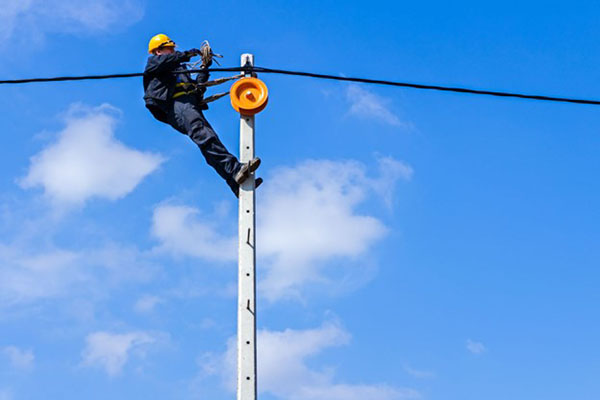
Net metering means thousands of people turn their homes and business properties into tiny power plants that connect to the power grid. These are called distributed energy resources, or DERs, and offer a glimpse of the future of power supply.
Multiple DERs have an enormous impact on the electricity grid and the utility companies that maintain it. First, utilities need a modern smart grid that can be controlled in real time to balance supply and demand. That requires investment in new technology and hardware to connect these DERs to the grid.
However, power grids that rely on multiple generators can be more reliable and flexible. Centralized grids, with just a few power sources, are vulnerable to power outages if just one power plant fails.
Billing becomes more complex, with charges and credits for customers. Crucially, utilities find themselves “paying” so-called prosumers for the electricity they generate, having spent decades charging them for their own power. This new payment relationship could ripple into the electricity prices for non-net-metering customers.
All these changes come with regulatory compliance, health and safety, liability, and insurance issues. What makes the energy industry seemingly more straightforward on the one hand adds layers of regulatory complexity on the other.
What Are the Potential Drawbacks of Net Metering?
Net metering is not a panacea for energy ills or a solution to the loss of renewable energy generation. Drawbacks include the following:
- Only some states offer or are ready to provide net metering.
- Net metering policies vary nationwide. Some are restrictive, while others provide greater rewards.
- Some states and utilities use fees, confusing tariffs, and tangled regulations — making participation difficult for small renewable energy generation sites.
- Light electricity users with relatively large generation capacity may only be able to use some of the bill credits they receive.
- Retail prices paid by utilities for electricity do not always match their value. For example, solar power exported to a grid during peak hours may be worth much more than the bill credit
- High concentrations of net metering properties in one area can cause utility companies headaches when balancing the grid.
- Wealthier households are often those that can afford to install renewable energy systems, so there’s a risk of rewarding those who can afford their energy bills, while lower-income families may miss out and face higher energy bills.
- It’s not available to anyone off-grid.
- There are challenges surrounding bill credits and payment energy as more people connect to the grid, such as how utilities cope with reduced revenues.
Power to the People
At first glance, net metering solves many burning issues surrounding small renewable energy generation sites. Excess electricity feeds into the electric grid, helping utility companies balance the grid and property owners reduce their home’s average utility bill costs through credits.
This “positive circle” means burning fewer fossil fuels to power society while helping people benefit from the transition to clean energy. Greater energy independence, a cleaner environment, and a more stable grid are extra benefits.
As with all energy issues, the smaller picture often complicates the larger one. Enormous electric grids need more generators yet may struggle to modernize and incorporate them. Bill credit rewards are great for people who can afford solar panels, but others may be left behind. Big companies and lobbied states are not averse to slamming regulatory doors in the face of those who risk their profits.
For now, net metering is a largely positive way to encourage people to adopt renewable energy generation at home through solar panels, wind turbines, or other sources. Its future in the current guise is unknown, or, at least, most likely to be different.
Brought to you by energysavings.com
All images licensed from Adobe Stock.