
Key Takeaways
- Marie Curie was the first woman to win a Nobel Prize.
- Her work revolutionized cancer treatment and X-rays and led to the discovery of two new elements.
- In her name, Curie’s charitable work lives on today through hospitals, research, and care.
- Marie’s life was cut short by her work and tinged with tragedy.
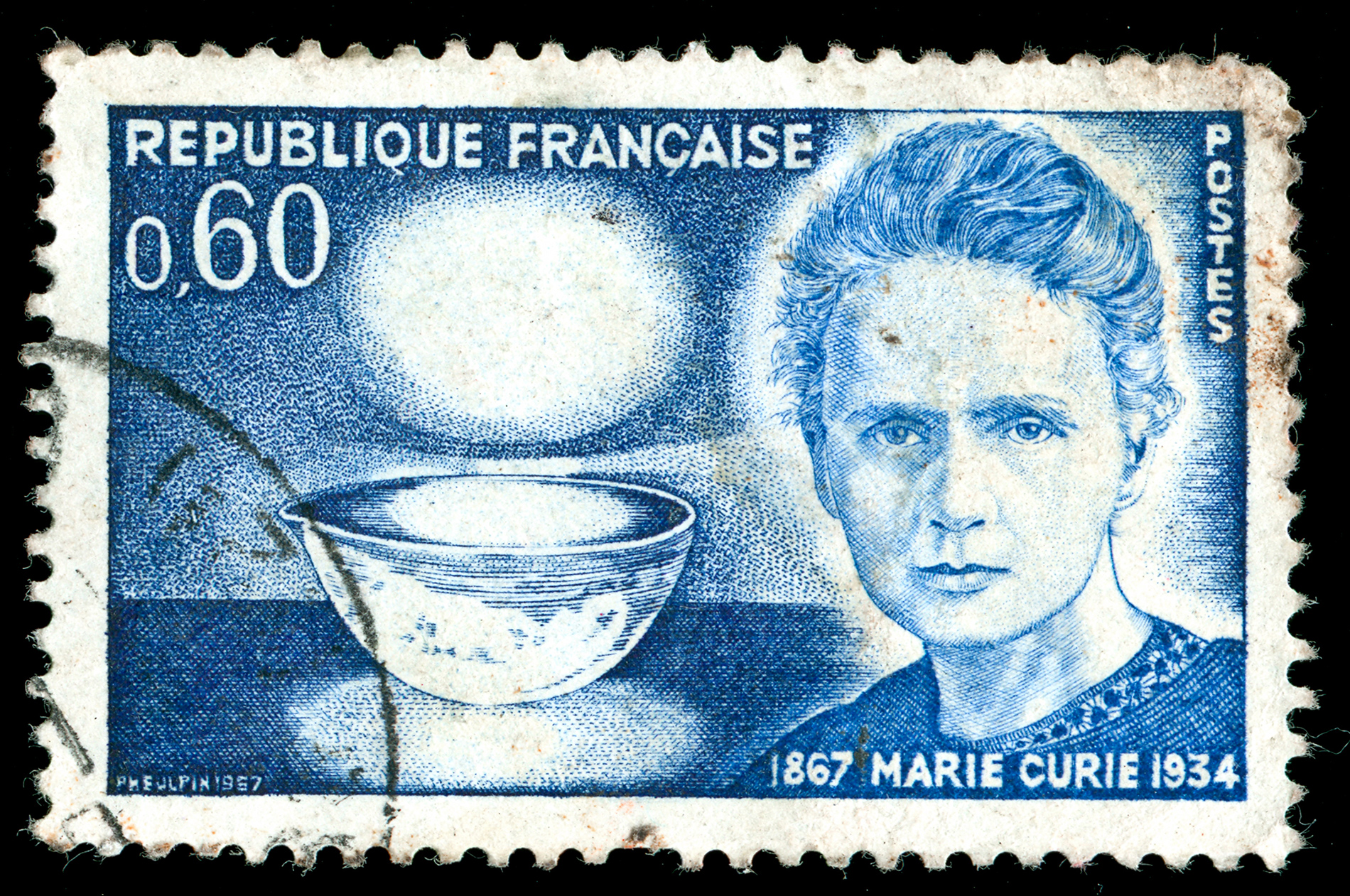
Marie Curie was the first woman to win the Nobel Prize and the first person to win it twice. Through her research, she saved countless lives.
Her name lives on as a beacon of charitable work and one of the most extraordinary scientists ever. Thanks to her incredible talents, Marie Curie smashed many glass ceilings for women in science and paved the way for vital future discoveries.
Let’s enjoy this scientist’s remarkable life story, tainted with tragedy, from her Polish homeland to her career in France.
Who Was Marie Curie? A Brief Timeline
Full name: Marie Curie, née Maria Sklodowska-Curie
Birthplace: Warsaw (modern-day Poland), on November 7, 1867
Died: Aged 66, July 4, 1934, in Sallanches, France
Spouse: Pierre Curie (married: 1895-1906)
Children: Irène Joliot-Curie, Ève Curie
Major honors: The Nobel Prize in Physics in 1903 and the Nobel Prize in Chemistry in 1911
Marie Curie’s Early Life and Education
Maria Sklodowska was born in Warsaw on November 7, 1867, a city that was part of the Russian Empire at the time. She was the youngest of five born to Wladyslaw and Bronislawa, both teachers.
Maria’s father taught math and physics, passing his knowledge on to his daughter and giving her a headstart in the fields. Sadly, her mother died after a long battle with tuberculosis when Maria was just ten years old.
Despite excellent academic results, Maria wasn’t allowed to attend the male-only University of Warsaw to continue her education. However, Warsaw had an underground educational movement with so-called “floating universities” where Maria continued her studies.
She also worked as a tutor to save money for tuition fees and pay for her older sister Bronya’s medical degree in France. The sisters’ deal saw Bronya, now graduated, support Maria financially during her studies.
In 1891, at 24, Curie enrolled at Sorbonne University. She threw herself into her studies. Her poor financial position meant she reputedly survived on a meager diet of bread, butter, and tea, affecting her health.
Regardless, Curie forged ahead with her Chemistry, Physics, and Math studies. Within three years, she had two degrees: one in Physics and the other in Math. The year was 1894, and more change was coming.
Enter your ZIP Code and compare electricity rates
Who Was Marie Curie’s Husband?
Maria met her future husband, French physicist Pierre Curie, during her postgraduate research studies at the University of Paris. Here, Pierre was supervising Curie’s lab research, and the pair’s love grew over shared interests in cycling and magnetism.
Within a year, in July 1895, they were wed. Around this time, Maria started using the first name Marie, becoming Marie Skłodowska Curie.
The Curie matrimony would change their world and modern thinking.
In 1896, physicist Henri Becquerel was responsible for the discovery of radioactivity — by accident. Curie’s interest was piqued, and she was later joined by her husband, Pierre, in studying uranium rays.
In the interim, in 1897, Marie and Pierre saw their daughter Irène born, followed by Ève in 1904.
What Discoveries Led Marie Curie to Win Her Nobel Prizes?
German physicist Wilhelm Roentgen discovered X-rays in 1895, while Nikola Tesla was experimenting with shadowgraphs the year before. The following year, Henri Becquerel spotted uranium giving off rays called uranic rays. Marie Curie, together with her husband Pierre, took this work to the next level.
The couple examined uranium, with Pierre’s electrical measurement inventions assisting Marie. She found that thorium also gave off rays and proposed the name of these rays as “radioactivity.”
The Curies’ work also laid the ground for atomic physics. Marie theorized that the rays came from the atomic structure of an element and that atoms have “properties.” Nuclear energy developed from these roots. Marie, Pierre, and Becquerel were awarded the Nobel Prize in Physics for their work in 1903, the same year Marie passed her doctorate in Physics.
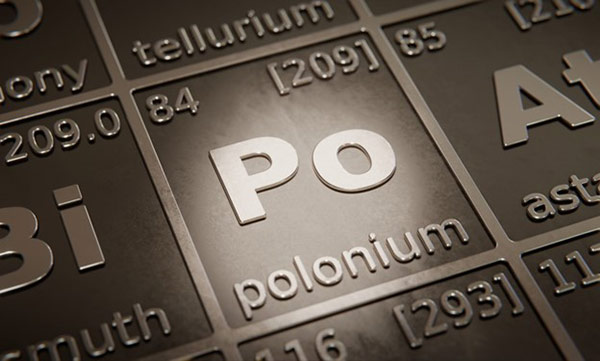
The Curies dug deeper, using a uranium ore mineral called pitchblende. In 1898, the couple found two new radioactive elements within the pitchblende. Marie named the first new element, polonium, after her native Poland, and it was given the atomic number 84. The second was pure radium, which Marie found gave out heat and light, seemingly forever, given the atomic number 88.
Marie Curie then spent four years isolating one-tenth of a gram of radium chloride from 10 tons of pitchblende. The discovery of radium helped her win the Nobel Prize in Chemistry in 1911.
Curie was the first woman to win a Nobel Prize. Amazingly, she was also the first person to win the Nobel Prize twice and remains the only person to do so in separate sciences.
But tragedy stuck between the first and second Nobel Prizes. The work also sowed seeds for Curie’s later health problems.
How Did Marie Curie’s Husband Die?
Pierre Curie died in 1906, between the two Nobel Prize successes. During heavy rain in Paris, he slipped and accidentally stepped out in front of a horse-drawn wagon. He died instantly.
Despite tremendous grief, Marie Curie took her husband’s professorship at the Sorbonne, becoming the first female to hold such a position in France.
Marie Curie’s Work After Nobel Prizes
In 1911, Sorbonne built the world’s first radium institute at the University of Paris. The two laboratories had different purposes. One studied radioactivity, while the other focused on cancer treatment research.
It was a busy year. Madame Curie was poised to make history by becoming the first person to win two Nobel prizes. Three days before the awards ceremony, the wife of Paul Langevin, a former student of Pierre’s and the man Curie was in a relationship with, publicly revealed the scandalous affair.
Despite the negative publicity and the advice to avoid the ceremony, Marie Curie decided to attend and accept her second Nobel Prize.
Curie also took part in the very first Solvay Congress in Physics. She was the only woman among famous male scientists like Albert Einstein and Max Planck, the originator of quantum theory. These great minds met to discuss the groundbreaking discoveries of the day.
Marie Curie was also convinced that ionizing radiation could help fight cancerous cells. Her work on radioactivity demonstrated that these discoveries could do more than generate energy and helped pave the way for radiotherapy in cancer treatment.
How Did Marie Curie Help Wounded Soldiers in World War I?

World War I started in 1914, with millions dying over its four-year duration. Curie wouldn’t stand by idly.
Throughout World War I, Curie and her 17-year-old daughter Irène developed and used portable X-ray units on battlefronts and military hospitals. Thanks to the X-ray units, an estimated one million wounded soldiers were helped by radiography before surgery. They diagnosed issues like lodged shrapnel before operations. These X-ray units gained the nickname “Little Curies,” or “Petites Curies” in French.
In 1918, with the World War over, Curie’s Radium Institute became a global leader in chemistry and nuclear physics. Marie Curie became an Academy of Medicine member four years later, another first for a female. She dedicated her studies to the medical uses of radioactive elements.
Marie Curie’s Work After World War I
Mare Curie’s fame, intellect, and undying charitable character led to further worldwide recognition in the 1920s. She visited the U.S. twice, in 1921 and 1929. On her first visit, then-president Warren Harding presented Curie with a gram of radium. The radium had been purchased by American women in a nationwide crowdfunding effort. Curie donated the gift to the Radium Institute in Paris.
The radium thread continued for her second trip to America. Curie brought money to buy radium, which she once more gave away, this time to the Radium Institute in Warsaw, an institute she helped found in 1932.
Other successes included:
- Member of the International Commission on Intellectual Cooperation by the Council of the League of Nations (1922)
- Advising scientists to patent inventions and discoveries, something she failed to do for her own work, albeit without any regret or resentment
- Campaigning for free access to international scientific literature
- Helping publish more than 450 scientific publications
- Awarding more than 34 doctorates
- Receiving numerous honorary degrees
- Writing vital scientific journals on the effectiveness of radioactive elements in cancer treatments (Recherches sur les Substances Radioactives (1904), L’Isotopie et les Éléments Isotopes, and Traité’ de Radioactivité (1910)
Enter your ZIP Code and compare electricity rates
How Did Marie Curie Die?
Curie and her husband Pierre often felt ill during their research, something we now recognize as radiation sickness.
Eventually, Marie Curie’s work with radioactive elements contributed to her death. Aged just 66, Curie died in 1934 of aplastic anemia—when a body stops producing enough red blood cells— in France. It was most likely caused by prolonged exposure to radiation.
In 1995, both Marie and Pierre’s ashes were interred in the Panthéon in Paris. Marie was the first woman to have remains there.
The family’s ability to astound science continued. Marie’s daughter, Irène Joliot-Curie, became a scientist and also worked with her husband, Frédéric Joliot. The pair won the Nobel Prize in Chemistry in 1935 for their research on extracting radioactive materials from stable elements. This work led others to create the atomic bomb.
Tragically, like her mother, Irène would die from radiation exposure from her work, resulting in leukemia.
What Are the Lasting Legacies of Marie Curie’s Work?

Curie’s main body of work led to the discovery of two elements, a deep understanding of radioactivity, and huge advances in cancer treatments. This new knowledge also laid the foundations for nuclear energy and our understanding of atoms.
Many institutions carry her name, from the scientific research at the Institut Curie that Marie founded in 1921 to Pierre and Marie Curie University (UPMC) and the Marie Curie Hospice and Community Services in London. The Marie Curie charity provides British cancer care support.
Many books and programs have been dedicated to Marie Curie, the person and Nobel laureate. Her daughter Ève wrote Madame Curie, which later became a movie. Other on-screen productions include:
- “Madame Curie” (1943)
- “Marie Curie: More Than Meets the Eye” (1997)
- “Marie Curie: The Courage of Knowledge” (2016)
- “Radioactive” (2019)
What Were Marie Curie’s Most Notable Achievements?
Marie Curie, born in Poland to teaching parents, made her way to study hard while living on bread, butter, and tea. Her dedication to science was rewarded when she became the first woman to win a Nobel Prize after her work on radioactivity with her husband, Pierre.
That was for Physics, and she followed it up by becoming the first person to claim two Nobel Prizes, this time in Chemistry, for the discovery of polonium and radium.
Curie lost her husband in tragic circumstances, but her work continued. Her mobile X-ray units helped save millions of lives during World War I. Her daughter, Irène Joliot-Curie, would also win a Nobel Prize in Chemistry for her work on radioactivity with her husband, Frédéric Joliot.
Her death from radiation exposure was the beginning of a legacy that lasts today. Women in science, research, cancer care, and the foundation of nuclear energy all stem from this remarkable Polish woman who moved to France to follow her academic dream, smashing numerous glass ceilings on her way up.
Brought to you by energysavings.com
All images licensed from Adobe Stock.