
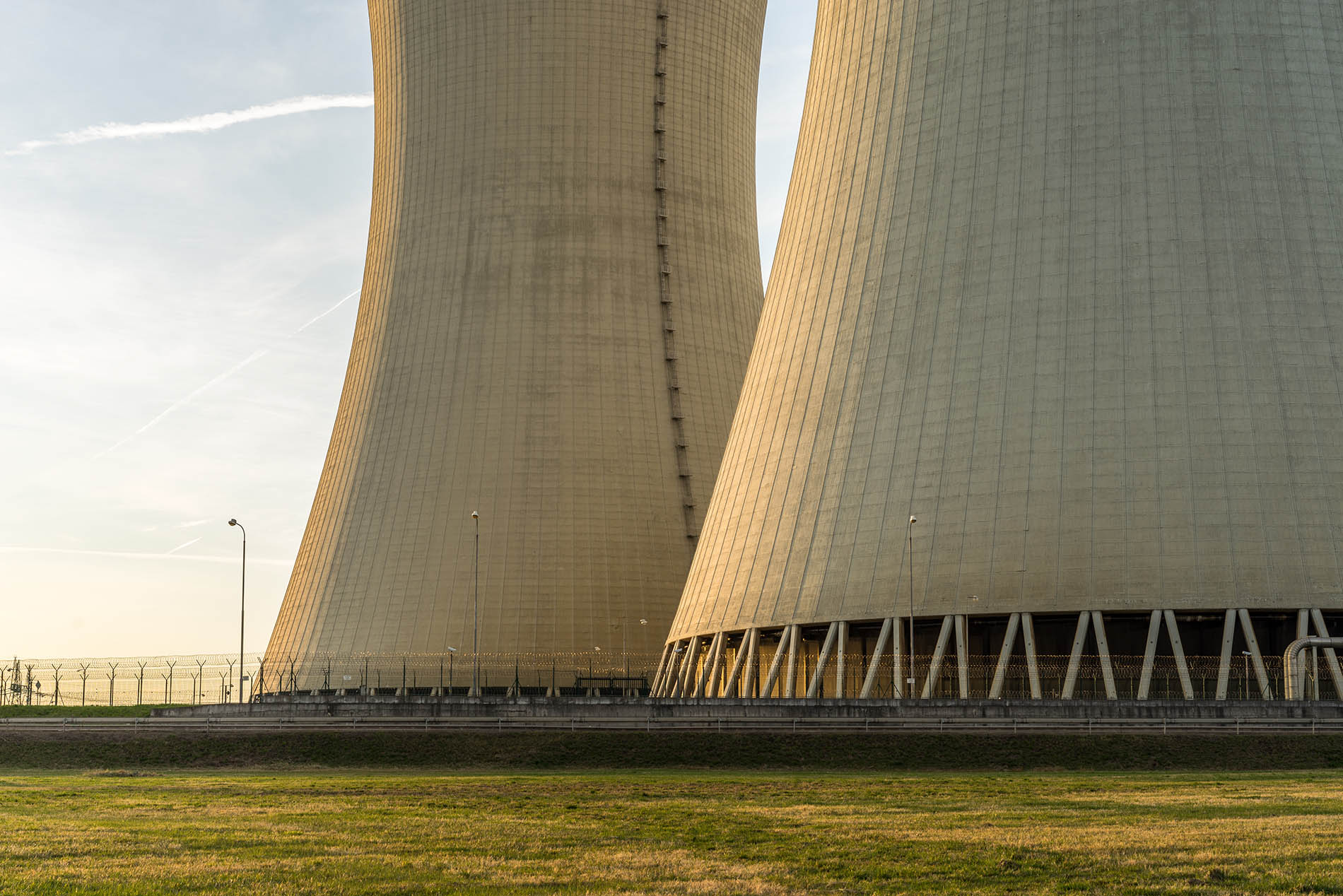
When it was first developed, nuclear energy was seen as a promising way of ensuring access to affordable and abundant power.
But many questions remain about nuclear energy, particularly around how it works and whether it’s safe.
Let’s take a closer look at nuclear energy to gain a better understanding of its advantages and disadvantages as well as the future of this controversial energy source.
What Is Nuclear Energy?
Nuclear energy has captured the imagination of many scientists (and regular folks) worldwide because it’s a carbon-free form of electricity generation. It produces large amounts of power (usually measured in megawatts) and no direct greenhouse gases. But how does it work?
The “nuclear” in nuclear energy refers to the nucleus of an atom, so that’s where our story begins. You’ll recall from high school chemistry that an atom is made up of two basic parts: the nucleus, which contains positively-charged protons and neutral neutrons, and negatively-charged electrons orbiting the nucleus.
The basic properties of an atom come from the number of protons its nucleus contains. For instance, helium contains fewer protons than iron and is therefore smaller and lighter. Atomic “isotopes” result when two atoms with the same number of protons have different numbers of neutrons.
Hydrogen, to take an easy example, comes in three isotopes: protium (which has one proton and no neutrons), deuterium (which has one proton and one neutron), and tritium (which has one proton and two neutrons).
The “energy” in “nuclear energy” comes from the chain reaction that results from splitting an atom. Nuclear fuel, such as uranium or plutonium, is bombarded with neutrons, causing it to split. This releases both heat and more neutrons, which then slam into more atoms, keeping the reaction going. The heat is used to turn water into steam, which spins a turbine and results in power generation.
Nuclear Fission vs. Nuclear Fusion
This process — in which an atom is split — is known as nuclear fission. There’s another, more theoretical approach to nuclear power called nuclear fusion. As its name implies, nuclear fusion occurs when two smaller atoms fuse (or rather, collide) to form a larger atom. Two hydrogen atoms might slam together to form helium, for example.
Fusion releases a great deal more energy than fission, and it doesn’t produce dangerous radioactive byproducts that need to be stored and managed. Why, then, aren’t we all using nuclear fusion already? Mostly because the engineering challenges are so great. It’s incredibly difficult to sustain nuclear fusion reactions because such high pressure and temperatures are required to get nuclei to fuse.
Work is nevertheless ongoing, and in 2022, scientists achieved a major breakthrough when they were able to create a fusion reaction that generated more power than it consumed. The technology is still not ready to be commercialized, but it’s nonetheless an incredibly exciting development.
Pro tip: Learn more about the differences between nuclear fission vs. fusion with our trusty guide.
Enter your ZIP Code and compare electricity rates
Who Discovered Nuclear Energy?
The discovery of nuclear energy spans a whole history of people, starting with the German physician Wilhelm Roentgen who discovered the X-ray in 1895. Soon after, Marie and Pierre Curie defined radioactivity in 1898.
In 1920, the “father of nuclear physics” Ernest Rutherford presented a theory about neutrons, which were identified some 12 years later by another scientist. In 1938, Otto Hahn and Fritz Strassmann split a uranium atom and hence nuclear fission was born.
A year later in 1939, Albert Einstein signed a letter written to President Franklin Roosevelt to warn about the dangers of nuclear energy if used in bombs (particularly by the Nazis). On August 6, 1945, the U.S. dropped an atomic bomb on Hiroshima, Japan, thus signaling the end of World War II and the start of the Cold War that lasted throughout the 20th century.
What’s a Nuclear Power Plant?
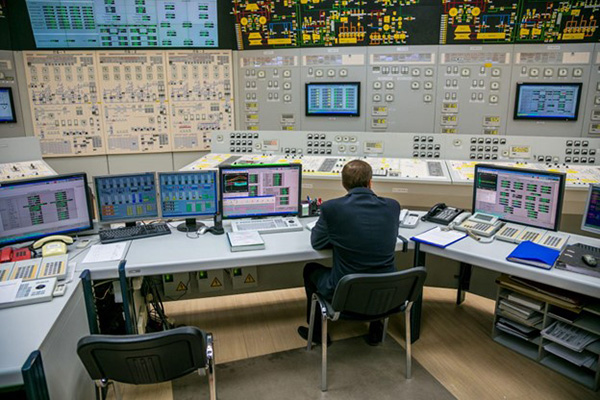
So far, we’ve said a lot about the basic mechanics of nuclear energy, but where does all this bombarding, splitting, and fusing actually happen?
The answer: inside the nuclear reactor that forms the center of a nuclear power plant. Nuclear reactors contain and control the nuclear fission process. First, a fuel like uranium is shaped into ceramic pellets, which are stacked and sealed in a metal tube called a fuel rod. Around 200 or so of these fuel rods are packed together into a fuel assembly, and a few hundred of these assemblies are what go into the reactor core.
To both cool them and slow down the fission process so its sustainable, fuel rods are immersed in water. The reaction rate can be further modulated with control rods — inserting more control rods slows down fission and removing them speeds it up.
The fission produces heat, which turns water into steam, which spins a turbine, which produces electricity.
There are a few different reactor designs. In the United States, all commercial nuclear facilities are what are known as light-water reactors, meaning that they use plain “light” water as a coolant and to control the flow of neutrons produced during fission.
In places like Canada there are also heavy-water reactors, which use deuterium, a heavier isotope of hydrogen we discussed earlier (but these are beyond the scope of this article).
Light-water reactors are further subdivided into two categories. Pressurized water reactors (PWRs) form the majority (more than 65%) of American commercial nuclear reactors. PWRs work by pumping pressurized water through the reactor core, which has been heated by fission, then pumping this water into a heat exchanger. The heat exchanger then heats a separate water source into steam, which spins a turbine.
PWRs use pressurized water because they don’t want the water boiling inside the core. Boiling water reactors (BWRs), on the other hand, do exactly that. Water is pumped directly into the reactor housing, turned into steam, then fed through pipes to spin a turbine.
What’s the Future of Nuclear Power?
As impressive as current reactor models are, there are researchers working on even more advanced reactors. This crop of new reactor designs includes:
Liquid metal fast reactors (LMFRs): LMFRs use a liquid metal such as sodium or lead as a coolant instead of water. One exciting thing about this approach is that they can be fueled with uranium, but they can also be fueled with nuclear waste (such as plutonium) produced by earlier generations of nuclear reactors.
Molten salt reactors (MSRs): MSRs are distinguished insofar as they use molten salts as coolant rather than water. Some MSRs use fuel rods like current reactor designs do, but they can also use fuel dissolved in the salt. Like LMFRs, MSRs can use nuclear waste as fuel.
High-temperature gas-cooled reactors (HTGRs): HTGRs are cooled with a gas like helium or carbon dioxide. They use uranium as fuel, and, as their name suggests, they operate at extremely high temperatures.
Where Is Nuclear Technology Used as an Energy Source?
As of 2020, there are commercial nuclear power plants in 33 countries. In 17 of those countries, at least 20% of total annual electricity generation is handled through nuclear sources. Across the European Union, nuclear provides about 25% of all electricity.
Here are the biggest users of nuclear energy:
- United States (20% of total electricity from nuclear)
- France (69% of total electricity from nuclear)
- China (5% of total electricity from nuclear)
- Japan (5% of total electricity from nuclear)
- Russia (21% of total electricity from nuclear)
But it’s not just bigger and more economically advanced countries that are exploring nuclear options. Belarus, for example, recently announced its intention to build a second unit for its sole nuclear power plant. Once added, it’s expected to produce 18.5 terrawatt hours (TWhs) of electricity, a sizeable amount for a country like Belarus.
Is Nuclear Power Dangerous?
As promising as nuclear energy is as a power source with nearly zero emissions (although it’s worth noting that it still involves mining uranium and building power plants, which do produce carbon emissions), it has some inherent dangers. Famous nuclear reactor meltdowns in places like Chernobyl (in Ukraine), Three Mile Island (in the U.S.), and Fukushima (in Japan) have left a lasting impression in the minds of the public, and the nuclear industry is held to very high safety standards.
This was part of the motivation behind the establishment of the Nuclear Regulatory Commission (NRC). The NRC was established in 1974 for the purpose of regulating the American nuclear industry. It oversees the construction of nuclear power plants and the uses of nuclear materials in other contexts, like medicine.
The International Atomic Energy Agency (IAEA) was created even earlier, in 1957, as part of the United Nations. Its overriding mandate is to do everything it can to ensure that atomic energy is put to use making people’s lives better instead of building more advanced weapons systems.
But to return to the main question, the truth is that there can be real dangers associated with nuclear power. Nuclear reactors are complex pieces of engineering that require a great deal of skill to build and run safely. So long as this fact is appreciated and a competent workforce exists that is up to the task, nuclear power can continue to be an important part of the energy mix of the future.
For all the attention that accidents like Fukushima have received, there are nuclear plants all over the world that have been quietly running for decades, supplying power to millions without any substantial problems.
Is Nuclear Waste a Problem?
A related question concerns what is to be done with nuclear waste. One of the byproducts of the nuclear fuel cycle is spent fuel, also known as radioactive waste owing to its radioactivity.
Nuclear waste has to be stored very carefully because it can remain toxic for thousands of years. Storage methods differ depending on the type of spent fuel, but they usually involve sealing it away underground or in a special facility to prevent radiation from leaking.
That said, proponents of nuclear energy assert that nuclear waste is a manageable problem. The nuclear industry produces a relatively small amount of total waste, it isn’t substantially worse than other toxic industrial byproducts, and there are proven technical solutions for storing and disposing of it.
Is Nuclear Power Considered Green?
First, let’s define green energy. Also known as clean energy or renewable energy, green energy sources — such as hydropower, wind energy, and solar power — are often contrasted with non-renewable fossil fuels like oil and natural gas.
This contrast is done in terms of the energy source’s emission of greenhouse gases like carbon dioxide and its sustainability over the long term.
According to the U.S. Office of Nuclear Energy, nuclear energy compares favorably enough in these respects to qualify as green energy. It produces zero emissions, requires a small amount of land, and produces a small amount of manageable waste.
Nuclear Energy: One of Many Options
Nuclear energy leverages humanity’s deep knowledge of atomic physics to create energy, either through fission (splitting an atom into smaller pieces) or fusion (fusing smaller atoms into large ones).
Because it produces no emissions and only a small amount of waste, it’s considered a green technology that is already providing power in countries across the world. That said, there are risks with this form of energy, including incredibly detrimental accidents and radioactive waste that will last for thousands of years.
As with most things in life, knowledge is power. Learn more about the pros and cons of nuclear power and get the facts on other forms of renewable energy to help ensure a brighter future.
Brought to you by energysavings.com
All images licensed from Adobe Stock.
Featured image: